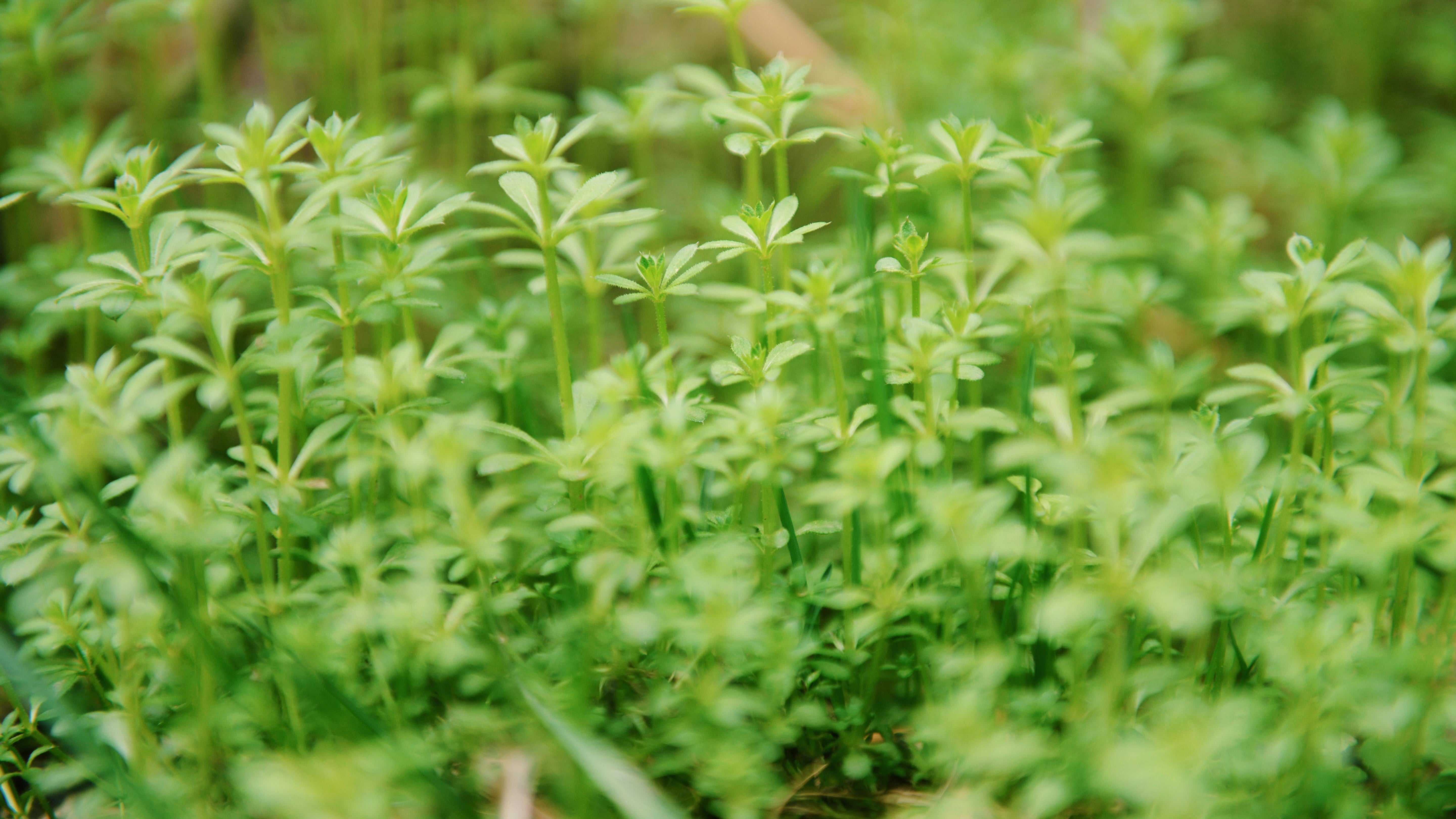
Cleavers (Galium aparine): The Lymphatic Herb for Gentle Movement and Spring Renewal
Cleavers (Galium aparine) is one of the first plants to emerge in early spring, often growing in soft, tangled clusters along forest edges, gardens, and pathways. Often called "sticky willy" and known for its delicate, clinging nature, it attaches easily to skin and clothing almost like velcro — a characteristic that reflects its deeper role in the body.
In herbal traditions, plants often reveal their purpose through their form. Cleavers, which gently clings, winds, and moves, has long been associated with the lymphatic system; a network responsible for fluid movement, immune function, and the clearing of waste. Its appearance in spring is not incidental. It emerges at the same time the body begins to shift out of winter stagnation and into a phase of movement, making it one of the most aligned seasonal herbs for this transition.
Traditional and Modern Uses of Cleavers
Cleavers has been used for centuries across European and Indigenous traditions as a cooling, cleansing spring tonic, particularly valued for its ability to support fluid movement and clear stagnation after winter. Ancestrally, it was not viewed as a single-purpose herb, but as a plant that supported the body’s natural ability to regulate, clear, and restore balance during seasonal transitions. Historically, cleavers was used as:
-
A lymphatic tonic
Considered one of the primary herbs for moving stagnant lymph, reducing swollen glands, and supporting immune function -
A diuretic and urinary support herb
used to treat bladder infections, kidney stones, and reduce water retention
-
A skin and wound remedy
Applied as a poultice or wash for conditions like eczema, psoriasis, acne, and as a remedy for sunburns and scratches.
-
A “cooling” blood purifier
Traditionally used to reduce heat and inflammation in the body, particularly in conditions presenting with redness or irritation -
A nutritive spring plant
In times of scarcity, the seeds were roasted as a coffee substitute. Young plants were consumed as a spring tonic cooked in soups or as a leafy green
Spring tonics often included cleavers as a way to “clear winter buildup,” reflecting a deeper understanding that the body benefits from gentle support as it transitions into a more active state. These traditional uses closely inform how cleavers is used today. In modern herbal practice, cleavers is commonly used to support:
- lymphatic drainage, swelling, and areas of stagnation
- skin health, particularly when linked to internal imbalance (acne, eczema, psoriasis)
- mild fluid retention
- overall detoxification and elimination pathways
Because of its subtle and non-aggressive nature, cleavers is typically used consistently over time rather than as a short-term intervention. Rather than forcing change, it works gradually to support movement where there has been stagnation and helping the body return to a more balanced state.
Herbal Actions of Cleavers
Cleavers is classified as a lymphatic, alterative, and mild diuretic herb, meaning it supports fluid movement, gradual systemic balance, and elimination. Its primary actions include:
-
Lymphagogue
Encourages the movement of lymphatic fluid, helping reduce stagnation and congestion -
Alterative (gradual cleansing)
Supports the body’s natural ability to process and eliminate metabolic waste over time -
Mild diuretic
Promotes gentle fluid elimination through the kidneys -
Anti-Inflammatory
Helps calm inflammatory states, particularly in the skin and tissues -
Vulnerary
supports internal & external skin healing
These actions make it particularly useful during times when the body feels sluggish, congested, or slow to clear.
How Cleavers Works in the Body
The lymphatic system does not have a central pump like the heart. Instead, it relies on movement, both physical and internal, to circulate fluid. When lymphatic flow becomes stagnant, it can show up as:
- puffiness or swelling
- skin congestion
- fatigue
- or a general feeling of heaviness
Cleavers supports this system by encouraging gentle movement of fluid, rather than forcing elimination. Because of this, it is often used in protocols that focus on:
- skin health
- immune support
- and overall detoxification pathways
Its effects are not immediate or aggressive, but rather cumulative and supportive, working best when used consistently over time.
Ways to Prepare Cleavers
Cleavers are most potent when used fresh, as many of its beneficial compounds degrade when dried.
Fresh Infusion (Tea)
- Chop fresh cleavers and steep in hot water for 10–15 minutes
- Drink as a mild, cooling herbal tea (hot or iced)
Cold Infusion
- Add fresh cleavers to cool water and let sit for several hours or overnight
- This preserves more of its delicate properties
- Muddle or blend the fresh cleavers and water for a more potent infusion
Tincture
- Fresh plant tinctures are commonly used to capture a broader range of constituents
- Often taken in small, consistent doses
Juicing
- Fresh cleavers can be blended or juiced for a more concentrated preparation
- Typically used short-term due to potency
Poultice (Topical Use)
- Crush or mash fresh cleavers into a moist pulp
- Apply directly to the skin and cover with a clean cloth
- Leave on for 15–30 minutes
This traditional preparation is used to soothe irritated skin, support minor wounds, and calm areas of inflammation. Because cleavers is cooling and gentle, it is particularly well-suited for sensitive or reactive skin.
Foraging Cleavers: What to Know
Cleavers are widely available and relatively easy to identify, making it one of the more accessible herbs for foraging.
Identification
- Thin, square stems
- Whorled leaves arranged in circles
- Tiny hooked hairs that cause it to “stick” to skin and clothing

Where It Grows
- Moist, shaded areas
- Forest edges, gardens, hedgerows
Best Time to Harvest
- Early to mid-spring, before the plant becomes too tough or fibrous
Harvesting Tips
- Use scissors or gently pull young plants
- Focus on tender growth
- Avoid areas exposed to pesticides, pollution, or roadside runoff
Because cleavers are delicate, they are best used shortly after harvesting.
A Seasonal Herb for Movement and Renewal
Cleavers is not a harsh or aggressive herb. It does not force the body into rapid change. Instead, it supports something more subtle: movement where there has been stagnation
Its role is not to overwhelm the system, but to gently encourage flow — aligning with the natural shift that occurs in spring as the body moves out of stillness and into renewal.
Frequently Asked Questions About Cleavers (Galium aparine)
What is cleavers herb used for?
Cleavers is traditionally used to support the lymphatic system, promote fluid movement, and assist the body in clearing waste, particularly during seasonal transitions like spring.
Does cleavers support the lymphatic system?
Yes. Cleavers is considered a lymphatic herb, meaning it helps encourage the movement of lymphatic fluid and may support areas of congestion, swelling, or stagnation.
What are the benefits of cleavers?
Cleavers is commonly used to support lymphatic drainage, skin health, mild fluid retention, and overall detoxification pathways. It is also known for its cooling and soothing properties.
How do you take cleavers?
Cleavers can be used as a fresh tea, cold infusion, tincture, poultice, or juice. It is most often used fresh, as its active compounds are more potent before drying.
Can you drink cleavers tea daily?
Cleavers tea is generally used as a gentle, supportive herb and can be consumed regularly for short periods, especially during seasonal transitions.
What does cleavers taste like?
Cleavers has a mild, slightly green and grassy taste, making it easy to incorporate into teas or infusions.
Is cleavers safe to use?
Cleavers is considered a gentle herb, but as with any herbal support, individual context matters. It’s important to be mindful of how your body responds.
Where does cleavers grow?
Cleavers grows in temperate regions, commonly found in moist, shaded areas such as forest edges, gardens, and hedgerows.
When is the best time to harvest cleavers?
The best time to harvest cleavers is in early to mid-spring, when the plant is young, tender, and most potent. Plants can also be harvested after going to seed for medicinal teas and tinctures.
Can cleavers help with skin issues?
Cleavers is traditionally used to support skin health, particularly in cases where skin concerns are linked to internal stagnation or imbalance. (acne, eczema, or psoriasis)
Does cleavers help with water retention?
Cleavers has mild diuretic properties, which may help support fluid balance and reduce mild water retention.
Is cleavers good for detox?
Cleavers is often used in preparation for deeper detox protocols because it supports the body’s natural elimination pathways, especially through the lymphatic system.
References
- Ilina T., et al. Phytochemical Profile and Immunomodulatory Activity of Galium aparine Extracts
- Ilina T., et al. Antioxidant and Immunostimulatory Activity of Galium aparine Infusion
- Beirami A.D., et al. Phytochemical and Therapeutic Potential of Galium aparine
- Hobbs C. Cleavers: Lymphatic Drainage, Diuretic, and Traditional Herbal Uses
- Herbal Reality. Cleavers (Galium aparine) and Its Role in Lymphatic and Detoxification Support
- EBSCO Research Starters. Therapeutic Uses of Cleavers
Read more

Before modern convenience shaped our routines, life moved in rhythm with nature. Food, movement, rest, and even emotional patterns shifted with the seasons. Healing systems across cultures were bui...

The lymphatic system is one of the most essential and most overlooked systems in the body. Unlike the circulatory system, which has the heart to keep blood moving, the lymphatic system relies entir...
Leave a comment
This site is protected by hCaptcha and the hCaptcha Privacy Policy and Terms of Service apply.