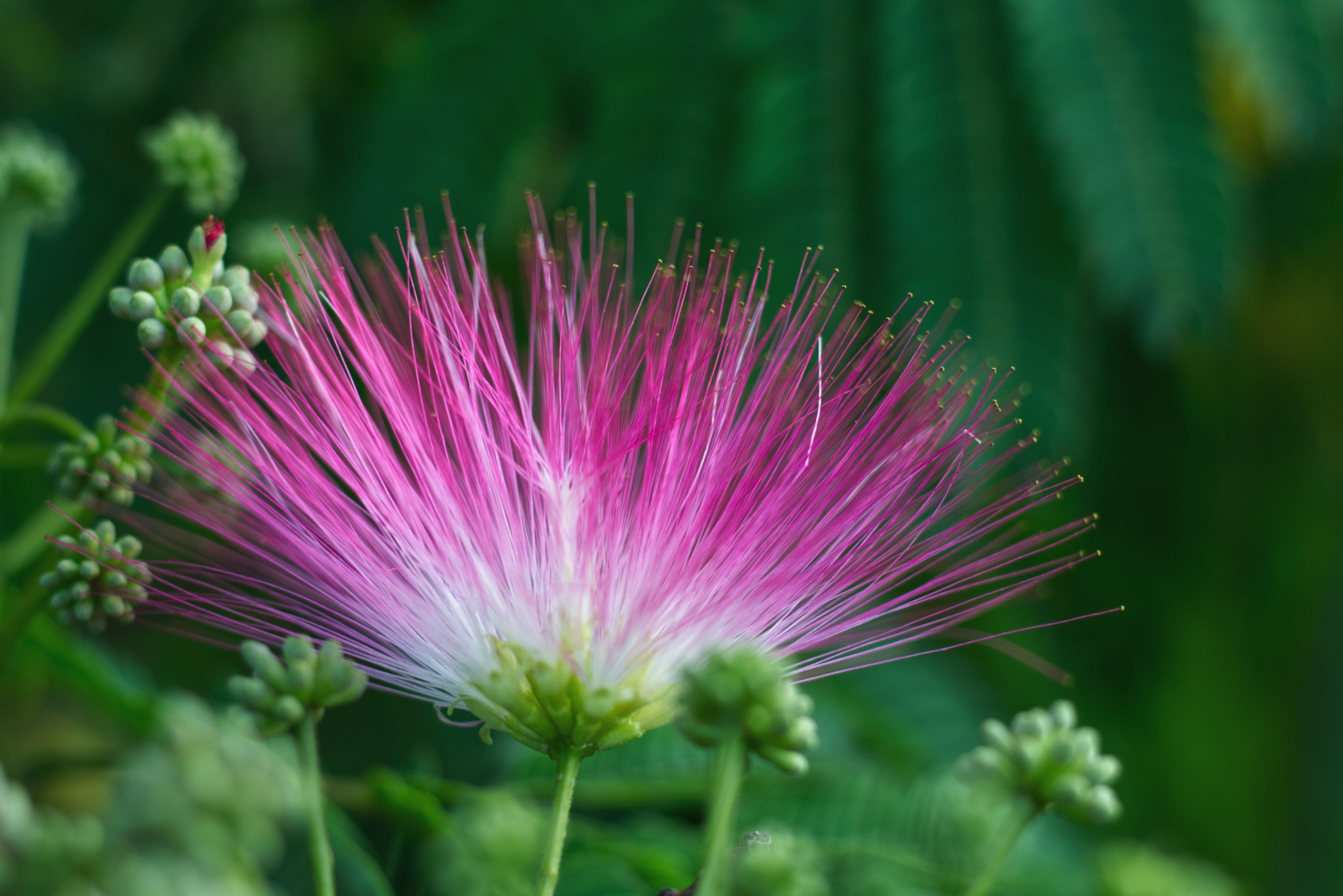
How to Make a Mimosa Flower Tincture | Herbal Medicine from the "Tree of Happiness"
Every spring/summer, when the fluffy pink blossoms of the Mimosa tree begin to bloom, I head outside with a basket in hand. Most people see Mimosa (Albizia julibrissin) as an invasive ornamental tree. In many parts of the United States, it spreads aggressively, outcompeting native species and earning a reputation as an ecological nuisance.
But one person's invasive plant is another person's medicine cabinet.
For centuries, Mimosa has been treasured in Traditional Chinese Medicine, where it is often called the "Tree of Happiness" and used to support emotional well-being, relaxation, and a balanced mood. While the tree may be controversial in the landscape, it has a long history as a medicinal ally. Today, I'm sharing one of my favorite ways to preserve Mimosa's benefits: a simple fresh flower tincture made using the folk method.
What is Mimosa?
Mimosa (Albizia julibrissin) is a fast-growing deciduous tree native to Asia that was introduced to North America in the 1700s.
It is easily recognized by:
-
Soft, fern-like leaves
-
Fragrant pink powder-puff flowers
-
Flat seed pods
-
A wide, umbrella-shaped canopy

While the tree has become invasive throughout much of the southeastern United States, herbalists continue to value both the flowers and bark for their traditional medicinal properties. For hundreds of years, Mimosa has been used to support:
-
Emotional balance
-
Occasional stress and tension
-
Restful sleep
-
Grief and emotional overwhelm
-
Overall nervous system support
Its long-standing association with uplifting the spirit is what earned it the nickname "Tree of Happiness."
Mimosa Flowers vs. Mimosa Bark
Both the flowers and bark have traditional uses, but they are not identical.
Mimosa Flowers
The flowers of the Mimosa tree are generally considered the gentler and more uplifting part of the plant. Traditionally, herbalists have used them to support emotional well-being, promote relaxation, and help the body adapt to periods of stress. They have also been valued for supporting mood, easing mental fatigue, and helping during times of emotional heaviness or sadness. Many people describe Mimosa flowers as having a subtle uplifting effect that helps brighten the mind and encourage a sense of calm without feeling overly stimulating or energizing.
Mimosa Bark
Why Is Mimosa Called the "Tree of Happiness"?
How to Make a Fresh Mimosa Flower Tincture
This preparation uses the folk method, one of the simplest and most traditional ways to make herbal tinctures.
What You'll Need
-
Fresh Mimosa flowers
-
Optional: small amount of Mimosa bark
-
High-proof alcohol (Everclear or vodka)
-
Glass jar with lid
-
Label
Instructions
-
Harvest fresh Mimosa flowers during peak bloom.
-
Remove the green stems if desired. Some herbalists prefer to use only the flowers, while others leave the stems attached.
-
Fill a clean glass jar with the fresh blossoms.
-
If desired, add a small amount of freshly harvested Mimosa bark.
-
Pour alcohol over the plant material until everything is completely covered.
-
Stir gently to remove air bubbles.
-
Seal the jar tightly.
-
Label with the date and contents.
-
Store in a cool, dark place for 6-8 weeks.
-
Shake occasionally throughout the extraction period.
-
After maceration, strain through cheesecloth or a fine mesh strainer.
-
Bottle and store away from direct sunlight.
How to Use Mimosa Tincture
A typical serving of Mimosa tincture is about 1–2 mL, taken as needed. While some people prefer to take it directly under the tongue for convenience, it can also be added to a variety of beverages. Many enjoy mixing it into sparkling water, fresh juice, mocktails, herbal sodas, or other botanical drinks. Its naturally floral flavor blends especially well with ingredients like citrus, berries, hibiscus, and honey, making it an easy and enjoyable addition to daily wellness rituals.
A Note on Invasive Plant Medicine
One of the things I appreciate most about Mimosa is that it reminds us that medicine can often be found in unexpected places.
While responsible land stewardship and native plant conservation are important, invasive species can sometimes provide opportunities for ethical wildcrafting. Harvesting flowers and bark from abundant Mimosa populations allows herbalists to work with a plant that has a rich history of traditional use while helping manage its spread.
Every summer, these bright pink blossoms become a reminder that nature often offers abundance where we least expect it. The next time you pass a Mimosa tree covered in blooms, you may not just be looking at an invasive species. You might be looking at one of herbalism's most beloved remedies for lifting the spirit and supporting emotional well-being.
Read more
When most people think about “detox,” they immediately focus on what to remove.But one of the most overlooked parts of supporting the body naturally is what you add back in. Hydration. Minerals. C...
Fatigue, dizziness, brain fog, weakness, shortness of breath, and poor endurance are commonly associated with low iron levels. But what many people do not realize is that it is actually possible to...
Leave a comment
This site is protected by hCaptcha and the hCaptcha Privacy Policy and Terms of Service apply.